Jury Summons

Jury Summons

Thursday, February 27, 2020

A Need for Curated Notetaking in Jury Trials: A Reply to "Jurors, Are You Still There?"


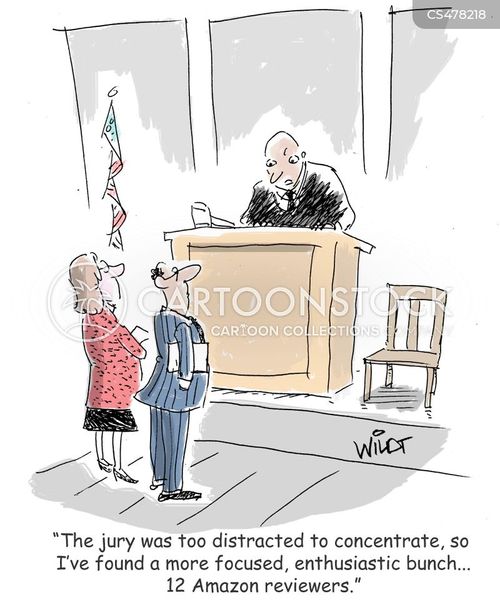
Last week, my colleague wrote a compelling post lamenting the state of jurors’ attention spans and the possible misconduct that might follow in situations where the entire jury is not carefully mulling over the evidence; instead, they are busy staring off into space, judging a female attorney's outfit, or even worse--sleeping. Emily's post presented viable remedies for the problem: encouraging juror notetaking or attorneys' use of visual aids. 

I would like to elaborate on what is needed for effective notetaking with regard to the materials provided to the jury. In addition to such curated notetaking materials, there are also cues attorneys themselves can implement so they can aid the process. In turn, attorneys will hopefully be able to worry less about jurors doodling and instead direct their energies towards the case itself.

The Problem with Notetaking Studies 
Notetaking as a general matter provides several benefits that can help keep jurors on task, such as the enhanced memory recall involved in both the act of writing itself and in having notes to review during deliberation. However, a 2003 study funded by the National Institute of Justice by Judge B. Michael Dann and Valerie P. Hans revealed that many positive correlations between juror notetaking and memory recall did not account for the education level of the juror. That is, once the study controlled for the fact that more highly educated individuals were more likely to take notes, "the independent effect of note-taking disappeared."

"Curated" Notetaking Materials

Because most jurors have not been students for many decades, many are out of practice (or never got into the practice) of taking notes. In order to help guide jurors on their quest to stay focused and to copy down the most important information, courts should consider offering notebooks with structured headings. Having a guide for the notetaking “facilitates at least two of the most important cognitive processes—selection and organization.”

A 2004 study by Titsworth and Kiewra revealed that such “organizational cues” increased the quantity of notes taken and jurors’ individual recollections of the information. Further, the results of Kobayashi’s 2006 study indicated that providing an outline for the notes was the most effective way to enhance the benefits of notetaking, because having a framework helps to guide jurors to the most relevant, important information. This method also benefitted jurors with lower academic levels, jurors whose notetaking—if they even took notes in the first place—did not aid their memory recall in several studies.

The Attorney's Role
How can attorneys capitalize on these findings? Even if the court does not supply these outlined notes, attorneys can take care when asking questions and making statements to emphasize key points and even specifically outline their argument. They can also cue their expert witnesses to draw attention to more important aspects of the case.

As this innovation has the potential to introduce a new battle, with litigants arguing about what to include on the outline, courts should ease in with generic headings that are common to every case, and consider further curating in more clear-cut cases down the line. The success of this, of course, depends on jurors picking up their pens in the first place, which in some cases may prove to be the biggest hurdle.


Tuesday, February 25, 2020

Contextual Perceptions: Are cases decided before the evidence is presented?

"He looked exactly like someone who would do this sort of thing." 

This was a response that I received during my juror interview after asking whether there might have been any contextual or circumstances that weighed on the jurors' minds other than the evidence presented. 

My juror was part of a child molestation trial wherein a grandfather and caretaker was accused of inappropriate behavior with his 6 year old granddaughter. I found myself wondering, "what does someone who might commit this sort of act typically look like?"My interviewee described the defendant as an older, white, scraggly and unkept male with poor personal hygiene. Based on the fact that there was almost no competent evidence of inappropriate behavior presented at trial, 10/12 jurors voted together for a non-guilty verdict. There were 2 hold-out jurors, however, who were convinced from the moment the defendant entered the courtroom, based on his appearance, that he was guilty and nothing was going to change their minds. And no one did. After 2 days of deliberation, the result was a hung jury. 

In continuation of the discussion initiated by classmate Sara regarding perception of disabilities in defendants, I expand the inquiry to any and all possible descriptors of defendants. Be it race, ethnicity, height, weight, agedisability, gender, sexual orientation, economic status, hired counsel, or any other potential identifier one may attribute to defendants, it seems that jurors often decide the case before they hear any evidence whatsoever. 

As someone who has always dreamt of and now intends to devote my life to the law and, specifically, trial work, the sanctity of the jury system is something I hold near and dear. Regardless of the client I'm representing or the opponent I'm facing, I would hope that each case and cause of action is determined independent of these superficial factors. Decisions that affect the lives and livelihoods of individuals should be based exclusively on the evidence and I therefore believe it's imperative that structures be in place to assure this to the best of our abilities. 

So, where do these responsibilities lie? With the legislature? With jurors? With the attorneys? With the Courts? With the defendants themselves? 

I believe the answer, in short, is all of the above. We, as collective members of the legal profession, must work in harmony to avoid these contextual, extra-evidential perceptions. 

As a defendant, I would assure that I'm putting my best foot forward and know that I'm being judged by my every action (and just being judged). As an attorney, I must ensure that my client is aware of these perceptions, that the jury knows to ignore these perceptions, and that my client receives a fair trial from start to finish. As the judge, I would hope to maintain the sanctity of my courtroom and of my trials especially. And as the legislature, I would examine data based on all of these individual characteristics and determine where gaps in the legislation need to be filled and corrected. 

It is important we keep an eye out for the over prevalence of contextual perceptions in our trials and assure that the evidence is given the weight that our constitution intended it to hold. 

Monday, February 24, 2020

The Fate of Oregon’s Non-Unanimous Jury Law


If you’ve seen any courtroom movie or tv show, you know how important a juror’s vote can be. It can be a matter of life or death. It can be the difference between walking away a free man or spending countless years in a prison cell. In the movie 12 Angry Men, for example, eleven of the twelve jurors were committed to sending a teenager to the electric chair for a murder he claims he did not commit. In order to send him to the chair, the vote needed to be unanimous. An 11-1 vote would have been insufficient and resulted in a hung jury. Thus, the defendant’s fate would have been left in the hands of another jury.

 In Oregon, however, James Worley was convicted of seven counts of sexually abusing a young relative on a 10-2 split verdict. One juror described how grueling the three-day deliberation process was, noting that it was “awful being in that room” and that coming to a decision was “very tough.” In any other state, this decision would have resulted in hung jury. But in this case, the 10-2 decision resulted in a twelve-and-a-half-year prison sentence. Oregon is currently the only state that still has a non-unanimous jury system. Accordingly, a criminal defendant can be found guilty by juries of 10-2 or 11-1. The only exception to the law is if the criminal defendant is charged with murder.

The Oregon law, which was passed in 1934, has received criticism by people claiming that it was enacted for “racist reasons.” A law professor in Oregon who has studied the history of non-unanimous juries, noted that the law was  intended to “dampen the influence of racial, ethnic, and religious minorities on juries.”  Now, the Supreme Court is weighing the constitutionality of non-unanimous verdicts and is expected to come to a decision this month. In Ramos v. Louisiana, a case currently before the Supreme Court, the defendant was convicted of second-degree murder based on a 10-2 jury vote. As a result, the defendant is currently serving a life sentence with no chance of parole. The specific issue in Ramos is whether the Fourteenth Amendment fully incorporated the Sixth Amendment guarantee of a unanimous verdict. If the Supreme Court decides that non-unanimous laws are unconstitutional, then the court would effectively overturn the ruling in Apodaca v. Oregon, which held that non-unanimous juries in state criminal courts are constitutional.

The idea of overturning Apodaca has divided many people in Oregon. As noted above, opponents of non-unanimous juries believe that the law is “rooted in racial and ethnic discrimination” and “allows for a jury to disagree in a way that . . . is not beyond a reasonable doubt.” On the other hand, supporters of non-unanimous juries argue that it makes the criminal justice system more efficient by reducing the amount of hung juries. Whatever the Supreme Court decides, however, will have a major impact on Oregon’s criminal justice system. For Mr. Worley, who has maintained his innocence, the possibility of overturning Apodaca has provided him with a glimmer of hope.

Sunday, February 23, 2020

Split Juries Should Not Result in Convictions


A 10-2 guilty vote in a murder trial usually leads to a hung jury. However, in Oregon defendants can be convicted in felony cases despite one or two jurors voting for acquittal. Oregon is now the only state in the nation where a jury can convict a defendant without a unanimous verdict. Hopefully, this won’t be the case for long.
The Supreme Court is currently considering the constitutionality of non-unanimous juries in a case called Ramos v. Louisiana. Until 2018, Louisiana was the only other state that allowed juries to convict defendants with non-unanimous verdicts. In November of 2018, Louisiana voters approved a constitutional amendment that requires unanimous jury verdicts in felony cases for crimes committed on or after Jan. 1, 2019. While this a step forward in protecting civil liberties, it does nothing for the defendants who were convicted of felonies by non-unanimous verdicts.
The Sixth Amendment establishes the right to an impartial jury. In Apodaca v. Oregon,  the Supreme Court ruled that the Sixth Amendment guarantees defendants the right to a unanimous jury. However, the Court ruled that this right only applies to defendants in federal trials. In Ramos, the Court has a chance to correct this erroneous ruling and rule that the Sixth Amendment’s guarantee to a unanimous trial was incorporated by the Fourteenth Amendment and as such applies to state governments.
The doctrine of incorporation is an easy one to grasp. The Bill of Rights are the first ten amendments to the Constitution. The Bill of Rights was initially interpreted to only apply to the federal government. However, starting in the 1920s, the Supreme Court has interpreted the Fourteenth Amendment to “incorporate” most portions of the Bill of Rights to apply to state governments as well. The most recent example of incorporation came in 2019 in a case called Timbs v. Indiana. In Timbs, the Court ruled that the Eighth Amendment’s excessive fines clause is applicable to the states via incorporation by the Fourteenth Amendment.
Commentators suggest that the Timbs decision indicates that the Court will incorporate the Sixth Amendment to be applicable to the states. However, the Supreme Court has previously stated before that the Sixth Amendment “was the one exception to complete incorporation.” Despite this statement, the Court should incorporate the Sixth Amendment and rule that allowing non-unanimous juries to convict defendants of felonies in state trials is unconstitutional.

Unanimity: How Many Jurors Should Agree Before a Conviction?


            One of the most important things that the Supreme Court can do is correct abuses of rights in the states. At the end of the day, legislation that is unconstitutional should be overruled so that the rights afforded to people in the Constitution can be upheld. A lot of debate has been had over what makes up a fair jury, and what any sort of margin should be in terms of a jury vote. Surprisingly, at least one jurisdiction will allow someone to be convicted of a felony without a unanimous vote. In Oregon, felony convictions can happen when nonunanimous, making them the only state in the United States to still operate in this way. But that procedure is under fire in the Supreme Court, where justices will rule on the issue hopefully once and for all. 

            There are arguments on both sides of this coin. On the one hand, a unanimous conviction is by and large the majority view for felony jury panels. And on top of that, it seems to be more in line with what the founders intended when they crafted the amendments. We make so much of a big deal about the need for fair juries made up of our peers that it seems to be missing the point when we then allow a nonunanimous jury to convict a person of a felony. The only other jurisdiction to allow for that was Louisiana, which passed a law in 2018 requiring a unanimous verdict. Advocates for this position also point out that if there is a divided jury there is at least a chance that innocent people have been locked up. And surely, a change of this magnitude would have repercussions not only for future trials in Oregon, but also in looking at past convictions. There are those who point out that it would be a lot for the appeals system to undertake should people challenge their convictions that were handed down by a divided jury, but if at least some of those people were innocent, wouldn’t it be a good thing to correct the record and allow them to continue their lives?

            There are those who are against the change. They most often point to prosecution rates as evidence that they may go down, leaving people who ought to be behind bars on the street and allowing more crime to take place. Victims’ rights groups point towards how this change would make it significantly harder to get justice for victims. Support for allowing divided juries to convict is based on a 1972 Supreme Court decision, in which they allowed divided juries on the state level, but not federal.
            But that’s a huge sticking point. If you’re the Supreme Court, it is your job to be the final resting place for debates such as this. In that 1972 opinion they say that juries must be unanimous for convictions on the federal level. They did this presumably by reading the Constitution and trying to consider what the Framers would have wanted. If their takeaway after an analysis of the Constitution is to only let unanimous juries convict, why is it ok for that to be the case on the state level. The Constitution is the supreme law of the land. How is one standard upheld for the federal courts but the state courts are allowed to have a lower standard? The Supreme Court should be deciding whether the Oregon statute is constitutional soon.

Jury Nullification I: The Practice Protected


Normally, during the heated (and not so heated) moments of a trial it is the attorneys who get to yell, “I object!” even if they are comfortable using it in everyday life. While it may be the attorneys who get to have all the fun in the court room, the jury is not without their own power to object. Granted, no juror is going to stand up and object in the classic sense. Rather, the jury as a group can object by deciding the outcome of the case against the weight of the evidence, or even against what the court thinks may be the “correct” outcome. This practice, known as jury nullification, is not necessarily a specific right set out to the jury, but the rare practice is seeing a resurgence in the present day. 

In most cases, juries will return a verdict that is in line with what the evidence presented. Whether the decision is the same that a judge or another group of individuals would make is irrelevant. That jury, hearing that evidence, from those attorneys made a decision that they are charged with making under the Constitution. This principle is the basis of jury nullification—even if a jury thinks that a particular party is guilty, they can still choose to acquit. But, you may rightly ask, what would make a jury want to let a guilty party walk free? The main answer seems to be that jurors will allow a guilty party to walk free when they deem that the law is worse for society than the crime committed. Today, there are protections in place that ensure jurors and their decision are protected once the verdict is handed down in court. Of course, verdicts are subject to appellate review, but the jurors themselves will not be held in contempt, or face other similar charges. While these protections are in place today, juries have not always been so lucky. 

While it may not have been the first instance of jury nullification, the facts leading to Bushell’s Case certainly make it one of the most well documented instances. In fact, there is a plaque commemorating the case in the Old Bailey in London, which ensures that its legacy is known and felt even today. Bushell was a juror in the case of William Penn (yes, Pennsylvania William Penn) and William Mead. Both Williams were arrested and tried for preaching a Quaker sermon, which was illegal as the Church of England was the official national church. The judge instructed the jury to return a guilty verdict for the Williams, but Bushell along with four other jurors refused to find the two guilty. The infuriated judge sent the jury back to deliberations and again instructed the jury to find the Williams guilty, but this time the jury returned a unanimous verdict, finding the Williams had merely spoken to an assembly in Gracechurch street. Now irate, the judge held the jury for two nights without “meat, drink, fire, and tobacco” to try to force them to return a guilty verdict. After this imprisonment, the jurors returned a unanimous not guilty verdict. 

Now incensed by the not guilty verdict, the judge held the jury in contempt and imprisoned them until their fines for contempt were paid. William Penn noted that this was against the values of the Magna Carta, but the judge would not be deterred. Bushell and three others refused to pay the fine, and were imprisoned for nine weeks. Bushell eventually filed for a writ of habeas corpus, and Chief Justice Vaughan of the Court of Common Pleas wrote the decision of the court. Justice Vaughn set out the first protections for a jury’s verdict by holding that it is “the right of juries” to give their verdict according to their convictions. This opinion had the effect of abolishing the practice of courts that would punish juries for verdicts that the court found unacceptable. Chief Justice Vaughan while recognizing the importance of protecting jury decisions, did still note that individual jurors could be punished for any inappropriate conduct. (Of tangential interest, Chief Justice Vaughan denied the writ of habeas corpus because he thought the granting of the writ should come from the King’s Bench, but the other justices on the court granted the writ over the Chief Justice’s denial.) 

Chief Justice Vaughan’s decision in the Bushell Case not only lead to the protections that exist for jurors in England, it also had an impact throughout the world since many of the British Colonies adopted the English Common Law in their jurisdictions. In the next part we will explore the impact this decision has had on court systems around the world, and will also talk about efforts in the US by groups hoping to make the practice of jury nullification more widely known. 

Juror Profiling: The Dangers of Social Media


Attorneys have likely catered their arguments to jurors for as long as Juries have existed. During the colonial era, Andrew Hamilton once infamously defended a charge of Libel waged against John Peter Zenger by appealing directly towards the colonists’ desire for liberty. Zenger’s guilt was clear to all parties involved: he had published an article in the New York Weekly Journal condemning the royal governor William S. Cosby as a corrupt and incompetent official; he made no attempt to deny the publication; and guilt for the crime of libel solely rested on whether Zenger had published information that was opposed to the government. Hamilton made no attempt to argue that Zenger was not guilty of Libel, but instead, he argued that the crime of Libel could exist in England but should not exist in the same way in the Americas. He appealed directly to the colonists’ burgeoning desire for Liberty claiming that the colonists were not “obligated to support a governor who goes about to destroy a province or colony.” Hamilton won the case and Zenger was found not guilty within ten minutes because Hamilton had correctly identified that the New York colonists were dissatisfied the English government and directly appealed to their sense that the Americans should not be beholden to the English rule of law.  
            The practice of attorneys catering their arguments directly to jurors’ sensibilities has slowly evolved over time. Today, it is standard practice amongst high stakes cases for attorneys to hire local counsel to advise attorneys about the arguments that will be well received by the local a judge and jurors. The advent of social media, however, has significantly altered the landscape of how attorneys perceive their local jurors. It has allowed attorneys to individually profile perspective jurors even before the jury selection. According to Pew Research, 69% of all Americans actively use Facebook and 74% of those users use the site daily. The American Bar Association’s Formal Opinion 466 allows attorneys to review “by the juror or potential juror in advance of and during a trial” as long as attorneys do not communicate directly or through another with the jurors or potential jurors.
            Although the ABA rules allow significant latitude towards an attorney’s use of social media, the practice of using social media to profile jurors is inherently unfair for lower-income clients. For example, public defenders do not have the time or resources to attempt this practice as they often do not have the resources and time to even build proper defenses. Similarly, since most attorneys charge by the hour, lower-income clients likely cannot afford additional services such as juror profiling using social media.
The purpose of a jury is to have an unbiased selection of a community judge a particular case, yet the use of social media has the ability to completely subvert these base principles. However, the use of social media to profile prospective jurors has the potential to drastically affect the overall jury verdict. Attorneys have a limited time to question jurors before the jury selection and it is human nature to not recognize one’s own personal biases. Yet social media has the ability to completely change the entire jury selection process. AIs can be trained to individually evaluate a prospective juror’s entire social media profile down to the level of the particular phrasing in a prospective juror’s individual posts. Although juror profiling through social media is still in its infancy, it is easy to see how the use of social media can create a clear unfair advantage for lower-income parties. When one party has the time and funds to investigate and determine a prospective juror’s stance on a wide range of social issues, family status, and individual relationships, that party may be able to easily predict a juror’s stance on the matters at issue without the use of jury selection. This gives that party a clear advantage in jury selection since their entire research process is not conducted in the presence of the court and the party has no obligation to inform the other side of the fruits of their research. Thus, the use of social media to profile jurors runs the risk of undermining our jury system by allowing one party to fill a jury with jurors receptive to their arguments completely without the other party's knowledge. Although this jury should not result in a completely unfair trial, it creates a distinct and undeniable advantage that has the potential to not conform with our American ideal of a fair trial. 

What Makes an "Impartial" Juror in the Trial of Roger Stone?

Although Roger Stone was convicted in November of last year and sentenced earlier this month to 40 months in prison, the case is not yet over. The case, which has been extremely high profile, concerned Roger Stone’s alleged obstruction of a House investigation into President Trump and included charges of witness tampering and lying under oath. Even following the verdict and sentence, however, the defense still has outstanding motions requesting both a new trial and the recusal of the judge who has presided over the case thus far.


Stone’s bid for a new trial concerns jury forewoman Tomeka Hart, who President Trump tweeted about earlier this month. Hart came into public scrutiny after she wrote a post on Facebook regarding the resignation of four prosecutors in the Roger Stone trial after the Department of Justice interfered with their initial sentencing recommendations. “I’m standing up for them now because I was a juror on the case. In fact, I was the foreperson.” Hart wrote in her Facebook post. Prior to serving on the jury, Hart had been outspoken in criticizing President Trump and his supporters, including a January 2019 retweet of another twitter user criticizing Roger Stone’s complains of excessive force from police.
            As of right now, however, it’s not clear whether Tomeka Hart lied during jury selection and mislead the defense as to her beliefs and public persona or whether the defense was simply unaware of the material that it now finds objectionable in her past. The difference here is key: if Hart lied under oath, and particularly in such a way that would have otherwise led to her being struck from the jury, she may have unfairly influenced the outcome of the trial. On the other hand, even if she told the truth to the best of her ability and thought herself impartial, it may be the case that her preexisting biases, if she had any, tainted the verdict.
            Perhaps most interesting in the argument about Tomeka Hart, however, are the arguments from President Trump that her outspoken criticism of the president amounts to bias against Roger Stone. One such remark from Hart which has been particularly noted in the media was her August 2019 tweet calling for Trump supporters to stop defending President Trump if they wanted not to be called racists.  Although being a democrat or disagreeing with the President clearly does not establish bias in itself, it is unclear whether open criticism of the President actually does amount to a bias against Roger Stone. Clearly, President Trump and Stone’s legal team would not have objected to a juror who was outspoken in being pro-Trump and defending the President, even if this raised similar questions of the transfer of bias from the President to Stone. The real question is whether Hart could have, and actually did, separate her biases against President Trump from biases against Roger Stone. It is this question that the judge will have to decide, excepting the unlikely event that she grants Stone’s motion and recuses herself, when court resumes in the coming weeks. Undoubtedly, whatever the judge rules, the case is likely far from through. President Trump’s continued tweets and comments regarding the case have hinted that a likely appeal or possible pardon may be on the horizon if the original verdict stands.

The Law for Regular People: Problems with Jury Instructions

On Thursday, a jury in Iowa left the court frustrated by what they perceived as a lack of justice being served: while they felt that Ceasar Davidson was guilty of helping to plan the murder of Demarcus “Peanut” Chew, they were not certain he was the actual shooter, and their jury instructions did not include an option to convict Davidson for aiding and abetting a murder – a strategic decision on the part of prosecutor Lisa Schaefer in the hopes of ensuring a guilty verdict on the murder charge. The jury foreman expressed a concern that haunted the jury: they were “fairly confident” that Davidson was the shooter, but “How do you define reasonable doubt? Is it 51%? Is it 80%?” It’s not controversial to assert that jury instructions matter. Attorneys may spend entire days before the trial bargaining over the jury instructions, and faulty ones can get a case overturned. The instructions define the jury’s options: in the Davidson case, the prosecutor elected not to give the jury an option to convict the defendant of aiding and abetting; in the Jeremy Christian murder trial in Oregon, however, the jury could convict for a number of lesser charges. Ultimately, jury instructions can make or break a trial.

However, some psychologists argue that lawyers and judges fail to effectively communicate to the jury what the law they’re being asked to enforce actually says. While sometimes this is the result of ambiguities in the law, in other cases jury instructions fail to adequately direct the jury to enforce the law, though experimental jurors generally try their best to follow instructions when they understand them.


Others question whether jurors are actually capable and willing to conform to the law’s requirements on how to use information presented at trial. To mitigate this, much effort has been put into trying to determine what information can make jurors better at their job: for instance, in the Wegener et. al article linked above, explaining to jurors the reasoning behind the limitations in the law can boost their compliance with its needs; for example, when judges explain the reasoning behind the exclusionary rule, so that jurors understand its purpose in the legal system, jurors generally make a more conscious effort to ignore the inadmissible evidence. Additionally, when the law is ambiguous, jurors will generally ignore the specifics of the instruction to conform the law to their “common sense” understanding of the matter at hand.

Perhaps, too, the Davidson jury can be forgiven for their questions about reasonable doubt; much to-do has been had over the specific definition to be given to jurors, and how jurors are instructed to interpret their burden of proof impacts their decision-making, both as individual jurors and as a group, with more specific standards producing more uniformity in jurors’ understanding.

Ultimately, the difficulty of jury instructions is that they must be interpreted by regular people, rather than the lawyers and judges who craft them with the benefit of a legal education behind them. More efforts should be made to ensure that jury instructions adequately define legal concept and tests, including the burden of proof, for jurors, and that these instructions justify to the jury the limitations presented by the law. Doing so will result in more reliable and more consistent outcomes, and will likely even boost the jury’s perception of their own ability to deliberate and come to a verdict in difficult cases.

A Hung Jury: The Harvey Weinstein Case and Jury Instructions

Image result for harvey weinstein
After the attempted impeachment of President Trump, America's eyes turned to a new trial: The Harvey Weinstein trial. In 2018, Harvey Weinstein was arrested and charged with rape, sexual assault, and various other sexual misconduct.  The famous movie producer is accused of taking advantage of numerous women and is currently sitting trial in New York.  The trial began on January 6, 2020, and on February 18, 2020, the jury was finally able to begin their deliberations.


Weinstein faces five separate counts of various sex crimes.  These counts carry hefty penalties that could land Weinstein in prison until his early 90s.  There is no doubt that the jury has some difficult decisions to make, and it appears that these difficult decisions have caused the jury to become deadlocked on two of the counts. 

On February 21, three days after deliberations began, the jury sent a note out to the judge explaining that they had reached a partial verdict and were hung on two counts of predatory sexual assault.  The defence was willing to accept the partial verdict, but the prosecution was not, so the judge sent back a simple instruction informing the jury that they should continue to deliberate until they reach a unanimous verdict on all the charges.  If the jury cannot reach a unanimous verdict on all the charges, a new trial will have to be scheduled and a new jury will have to be selected, essentially starting the process over.

While this case weighs heavy on the minds of the American public, I believe a separate issue was brought up because of the hung jury in this case.  The instructions to the jury add new pressure to a jury that is already having to make difficult decisions with the American Public closely watching.  The letter to the jury threatens a new trial. A new trial means that a new jury must be selected, witnesses must take the stand and recount their horrifying stories once again, and a verdict must be reached.  After so much media coverage of this trial, the question of whether a fair and impartial jury could be had anywhere could likely become an issue.  But even more so, one problem that sticks out in my mind is the instructions to the jury by the judge.  By no fault of their own, judges are limited in what they can say in response to questions from the jury during their deliberations.  The responses are usually a simple instruction to follow the instructions that were given to them before deliberations began.  In my experience, an instruction to the jury often does not address the question asked and is a scripted response to any and all questions that may leave the deliberations room.  It appears that the instruction given to the Weinstein Jury is no different.  The instruction appears to put more pressure on the Jury, and it a likely that deliberations will continue for a couple more days once they resume on Monday.

Against the Weight of the Evidence: Modern Uses of Jury Nullification


Jury nullification has long been promoted by some as a way for citizens to peacefully protest unjust laws. Recently, a few states have faced the question of whether informing potential jurors about jury nullification counts as jury tampering or whether it is free speech supported by the First Amendment. Back in September, the Colorado Supreme Court overturned the conviction of a man who was found guilty of jury tampering after he distributed pamphlets about jury nullification outside the courthouse. The Michigan Supreme Court is currently deliberating a similar case, after a lower court upheld a man’s conviction for passing out similar pamphlets. These decisions are especially timely in light of our nation's current debate about the utility and fairness of federal and state drug laws.

What is Jury Nullification?

Jury nullification occurs when a panel of jurors vote to deliver a “not guilty” verdict not because they believe the defendant is not guilty, but rather because they believe the law is unjust. The law is said to be "nullified" in these instances because the prosecution cannot retry the case, and the jury cannot be punished for delivering a not guilty verdict. Jurors can engage in jury nullification even if they do not ultimately end up delivering a verdict—one or two jurors refusing to vote in favor of a guilty verdict will cause a hung jury, and while a hung jury does not prevent the government from bringing the case again at a later date, the law is nullified temporarily as to the case at hand. 

This concept can be traced back to 17th century England, where courts recognized the right of the jury to acquit a defendant even when there was overwhelming evidence to the contrary. Even the Founding Fathers recognized this jury right—John Adams once stated that it is a juror's duty to vote his or her conscience, even if it is in "direct opposition to the direction of the court."

Despite its roots in our constitutional history, jury nullification has been and remains a highly controversial practice. For some, jury nullification represents a complete dereliction of a juror's oath to deliver a true verdict based the facts of the case before them. For others, jury nullification is a powerful tool to protest unjust and, in some cases, discriminatory laws. 

Modern Use of Jury Nullification

Although there are some high profile examples of jury nullification in our nation's history (the John Peter Zenger case, for one), it is difficult to say with certainty just how often jurors engage in nullification. It's possible that jurors are completely unaware of the concept altogether; the Supreme Court held over 100 years ago that jurors have no right to be told about nullification before deliberations, a view that the Ninth Circuit recently reiterated. But there have been recent efforts in some states like Tennessee and Oregon to include language about a jury’s right to nullify in standard criminal jury instructions, although these efforts have largely failed. Today, there are organizations like the Fully Informed Jury Association that advocate for jurors' rights to "refuse to enforce unjust law." These organizations generate pamphlets and literature much like those at issue in the Colorado and Michigan cases designed to inform jurors about the option to vote "not guilty" in cases where they believe the law is unjust. 

In light of today's conversation about the fairness and impact of our nation's drug laws, these organizations could play a large part in mobilizing potential jurors to nullify (or partially nullify) such laws. Additionally, if more states attempt to implement legislation that allows the use of jury nullification instructions, it's possible that this increased awareness, paired with the growing opposition to many drug laws, could lead to a diminished desire amongst law enforcement to bring the charges in the first place. This, of course, is the main objective of this movement, and it seems as though we are now in a place in history where this power of the jury could become more and more prevalent.